
Why Andy Burnham Has The Most Effective Public Speaking Skills We’ve Seen In Years
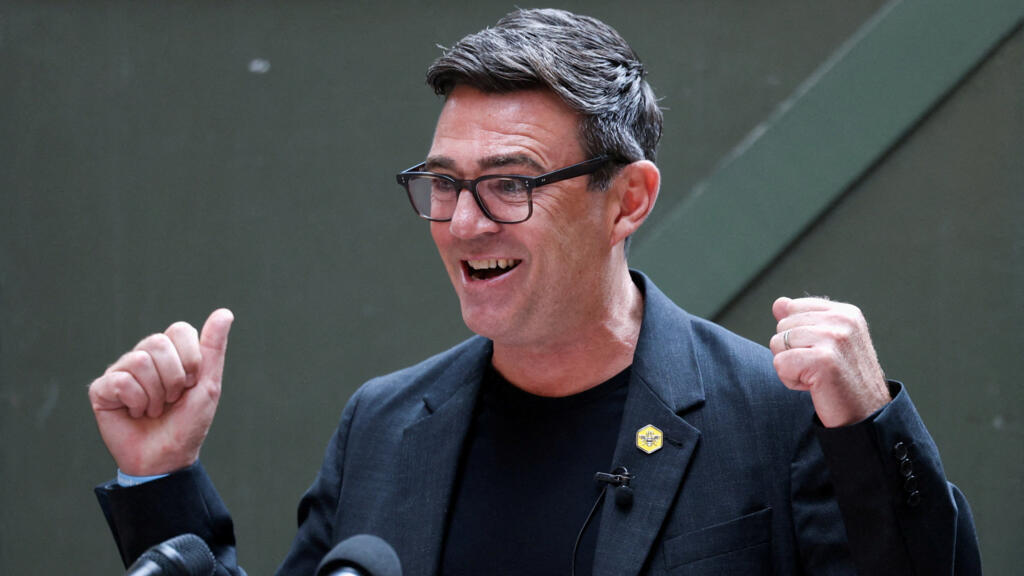
Over the past two weeks, as Andy Burnham has positioned himself for his “coronation” on July 20th, he’s repeatedly demonstrated what effective public speaking skills should look like in a leader. Last week he set out his vision for the country; this week, he outlined his vision for business. Both speeches, from my perspective, were cause for celebration.
Is this a return to the golden days of political oratory? Not quite. But that’s as it should be. Burnham isn’t doing grandiose – he’s keeping it real. And I don’t mean real as in “Call Me Dave” Cameron. Or real as in Nige “Man of the People” Farage (although there’s a touch of populism in his rhetoric). No, I mean genuinely authentic. And, in my opinion, that’s exactly what makes him worth watching.
Effective Public Speaking Lesson 1: Command the Room
What struck me most about his first speech was how at ease he looked. Not just comfortable on the public stage but appearing to enjoy himself – even landing a joke or two. This is what we want in a leader: someone who is “present”, who can come off script occasionally, comment on what’s happening in the room, connect with the audience in real time.
We haven’t seen much of this in recent years. Many of our recent leaders’ public speaking has ranged from awkward (hello, Keir Starmer) to robotic (sorry, Theresa May) to baffling (that’s you, Boris Johnson). But in Andy Burnham we finally have a leader who speaks as though he’s having a conversation with the audience. How refreshing!
This is the first lesson any coaching in effective public speaking skills will teach. Be yourself and, if possible, enjoy yourself because it will build trust in what you’re saying. The alternative – fixed posture, practised gestures, rehearsed pauses – doesn’t just look uncomfortable, it feels it (for the presenter as well as the audience).
There’s a telling detail in the New Statesman‘s account of that first Manchester speech: Burnham had written it himself, reportedly, over the previous weekend at home in Lancashire. Every metaphor, every observation, even the final rhetorical flourish – all his. That’s not a small thing. It’s the difference between a leader performing someone else’s words and one speaking their own convictions. Audiences can usually tell which one they’re watching.
Lesson 2: Draw A Picture With Words
Strip away the delivery and the substance of the first speech was familiar territory. He started with the usual framing: politics is broken; we need to change politics.
“I’m going to give Britain the circuit breaker it needs” is the kind of line that’s guaranteed to become a soundbite. It’s a solid, everyday metaphor and it fits the Burnham brand. It speaks to electricians as much as it does software developers. This could sound like empty rhetoric from most politicians but coming from Burnham, it lands differently – because he has a track record to back it up.
That’s worth noting for any leader: a bold line only earns its keep if the audience already believes you can deliver on it.
And that goes double for when he talked about working together, facing the same way or pulling he same direction, which he did repeatedly. But it felt less like a slogan coming from him because he had a reputation for doing just that as Mayor of Manchester.
Lesson 3: Harness The Power of Repetition
Of course, the repetition was deliberate, and it’s a classic storytelling technique: say the same idea three or four different ways in the same speech and it will stick.
He was borrowing from Winston Churchill there, who once said: “If you have an important point to make, don’t try to be subtle or clever. Use a pile driver. Hit the point once. Then come back and hit it again. Then hit it a third time – a tremendous whack.” Notice the concrete, memorable metaphor Churchill used there, reinforced through repetition. Burnham uses the same technique.
Lesson 4: Channel Your Passion
Watching the two speeches, I found myself thinking of the early days of Steve Jobs, back when his stagecraft was still a little rough around the edges, before the black turtleneck and the perfectly rehearsed pauses became iconic (and, I might say, a bit annoying). In the early 2000s, Steve Jobs’ presentations were a lesson in the power of passion to make people believe in an idea well before the numbers did the talking.
That’s roughly where Burnham is now (albeit in a black t-shirt rather than a black turtleneck). Not a finished product, but someone clearly developing his skills on a bigger stage and getting better with each outing. It’s no mean feat to combine a genuinely conversational style with rhetorical flourishes reminiscent of an older tradition of political public speaking.
Lesson 5: Finish Strong
He finished with an image rather than a policy list: “good growth in every postcode and hope in every heart.” It’s a good example of what any storytelling coaching session will tell you to aim for: a closing line that’s vivid, emotive and future-focused. More importantly, it’s an ending that suggests a bright new day ahead and offers hope.
None of this means the job is done, of course. A vision, a rejection of the old way of doing things, and a few memorable soundbites are all familiar elements of a good pitch. But a pitch is not a plan. Burnham must now deliver.
For any senior leader, the same rule applies: the speech earns you the room, but it’s the strategy and the execution that earns you the credibility to keep it.
If you’d like to improve your leadership communication or public speaking skills, contact us here.
Recent Comments